Home Cooked Dal Makhni

When I eat at a restaurant, I oftentimes wonder if I can replicate the same dish at home: keep the richness of the flavour, but cut out that cloyingly heavy feeling you get by eating that cream-and-butter-laden restaurant dish.

If you’re like me, you will like this recipe for Dal Makhani, which I made yesterday. “Makhan” refers to homemade white butter. This recipe contains no butter, but tastes just as good.

dalmakhni

Ingredients: (all measurements are approximate. Feel free to add or subtract to suit your discretion)

  • One cup whole masoor dal (also known as whole red lentil. If you live outside the Indian subcontinent, you will find it in any Indian or middle eastern grocery store)
  • Half cup rajma (red kidney bean)
  • One onion, finely chopped
  • Few garlic cloves, finely chopped
  • 2 green chillies, sliced lengthwise
  • 3 tomatoes, finely chopped
  • One fistful of cashew nuts
  • Spices: Salt, dhania (Coriander) powder, jeera (Cumin) powder, haldi (turmeric) powder and optionally some pounded cinnamon, elaichi (cardamom). If you want it light on spices, skip the cinnamon and elaichi.

Method: 

  • Soak the rajma in warm water for a hour. Soak the cashews in warm water separately for an hour.
  • Cook the masoor dal and rajma in a cooker and ensure they are well cooked, but not too gooey. Mash them with a hand masher so you can still see pieces of the lentil, but they’re soft and mixed together
  • In a kadai (wide saute pan), heat some groundnut oil, add the onions, garlic, green chillies. Saute until the onions are lightly brown, then add the tomatoes; reduce the flame, put a lid on and cook until the tomatoes turn soft
  • Now add the mashed dal, salt and other spices and let it simmer a few minutes. (I prefer to add the spices at this time, and not while sauteing the onions as this preserves their flavour and aroma)
  • Grind the soaked cashews into a fine, slightly runny paste. Add most of it into the dal and mix it up.
  • Pour into a bowl to serve, drizzle the rest of the cashew paste on top, add a few sprigs of coriander leaves to garnish.
  • Eat with hot rotis

This is an amazing comfort food during the rainy season. If there is any of it left over, just warm it up and eat it as a snack. Do try it out and let me know how it was.

Brown Rice Modak/Kozhakattai in Tamil

Tomorrow we celebrate Ganesha Chaturthi. Ganesha is considered the remover of obstacles and is typically prostrated to / worshipped first before any other task is taken upon (and that includes the pooja or worshipping of other deities as well.)

The archetype of Ganesha features a young plump lad, with an elephants head. He is unhurried in his gait, relaxed in his nature, and loves to eat all sorts of food. His favourite food (esp in the south of India) is a sweet steamed rice dumpling called the Kozhakattai in Tamil (Modak in Marathi).

kozhakattai2

The recipe below is a healthier version of the already healthy dish. This recipe uses brown rice flour.

To make the brown rice flour:

  1. Soak brown rice (2 cups) in warm water for a few hours until it is well soaked
  2. Drain all the water out and let it dry outside (but not under direct sun) for a few hours till all the surface dampness is gone.
  3. Dry grind the rice in a blender to yield a fine powder.

To make the kozhakattai:

Ingredients:

  1. 1 cup fine brown rice flour
  2. 1 tsp sesame oil
  3. Salt
  4. 1/2 cup grated coconut
  5. 1/2 cup grated jaggery
  6. A pinch of cardamom powder

Method:

  1. In a thick bottomed skillet, add the grated jaggery and coconut, stir on a low flame till they are incorporated into a nice gooey mixture. Turn off the flame, and add the pinch of cardamom powder to it and mix well. Set aside to cool
  2. In another skillet, pour 1 cup water, a pinch of salt and a teaspoon of oil and let the water boil. When it begins to boil, turn it off, pour the brown rice flour into it as a heap, and close it with a lid.
  3. Few minutes later, open the lid, the flour must have nicely absorbed the warm water into it and must be pliable like dough.
  4. Grease your fingertips with some oil and make a small ball of dough, start flattening it from the tips till you have formed a nice wide cup with the dough.
  5. Fill a teaspoon of the coconut jaggery filling (called the poornam). You can see a video of how to do it in this link: Kozhakattai Dumpling
  6. Make the whole lot of it and place it in a steamer and steam the dumplings for 5 to 7 minutes. (You will get an amazing fragrance of steamed rice)
  7. Cool and serve.

As always, would love to hear from you. Do try it out and let me know how it came. Wish you and your loved ones a very happy Ganesha Chaturthi.

Try out Kothavarangai Usili

I made this essentially Tamilian dish on Saturday, called “Kothavarangai Usili”. The secret sauce is fresh organic cluster beans (called kothavarangai in Tamil, Gor-chikkudukaaya in Telugu, and Guvar in Hindi/Urdu) and our very own Daana Organic Toor Dal.

Soak the toor dal in warm water. Drain all the water, and roast it in a tadka of mustard seeds, split urad, chana dal, curry leaves and dried red chillies. If you have soaked it enough and roasted it, the dal will be just cooked just right (neither raw, nor soft from over cooking). Thats the trickiest part of the recipe. The dal literally needs to be “al dente” and completely dry.
Now add this into a blender, along with freshly grated coconut and “pulse” it up, ie break it into fine granules but NOT a paste.

Steam finely cut cluster beans with salt (again make sure there is no water. This dish has to be dry), and add the granulated dal.
Garnish with some coriander leaves (dhania).

This is traditionally eaten with the Tamilian kadhi called Mor-Kozhambu and rice.

Full of body, texture, aroma and flavour. Try it out.

Image may contain: plant and food

Dwadasi rasam

Today is Ekadasi, the 11th day after the new moon (Amavasya). Traditionally folks used to fast on Ekadasi day. The terms of fasting ranges from full to partial depending on age, and how devout one is.

The following day, Dwadasi, in Tamilian families, they cook a special rasam, called Dwadasi Rasam. The main difference between regular rasam and this rasam is that moong dal is used instead of toor dal. Reason being that coming out of fasting, one should be eating food that is easy to digest. The traditional tamarind and tomatoes are also skipped, and lemon juice is used instead.

I have seen several recipes of dwadasi rasam include toor dal as well. As with the diversity of our country, one can expect many variations in this as well.

Try this dwadasi rasam. Tell us what you think, and please add your variations to the comments section as well.

Ingredients:

  • Moong Dal (Split) – ¼ cup
  • Turmeric Powder ½ tsp.
  • Water 2 cups.
  • Grated Ginger 1 tbsp
  • Chopped curry leaves – a few
  • Lemon Juice 2 tbsp.
  • Salt to taste.

Roast and Powder coarsely

  • Urad dal (Split) ¾ tsp.
  • Chana dal ½ tsp.
  • Black Pepper 1 tbsp.
  • Jeera  1 tsp.
  • Red Chilies  2 no.
  • Curry Leaves

FOR TADKA:

  • Oil 1 tbsp (cold pressed groundnut oil or sesame oil works great. Adds a nice aroma) .
  • Mustard seeds 1/2 tsp
  • Curry leaves a little
  • Crushed red chilies 2 no.
  • Asafoetida (Hing) a pinch
  • Chopped Coriander leaves for garnish

Method:

  • Pressure cook the dal with turmeric powder. Mash the dal and add 2 cup of water and dilute it. Transfer into the big vessel.
  • Add salt, turmeric powder, ginger, curry leaves and Hing and bring to boil on low fire.
  • In mean time, roast above ingredients (except jeera) and powder it coarsely along with jeera.
  • Add ground powder and boil , while rasam froths up, remove from the fire.
  • With one tablespoon oil, fry the mustard seeds ,when they burst add curry leaves crushed red chilies and Hing to it and pour them to the Rasam.
  • Add freshly squeezed lemon juice and mix well.
  • Garnish with chopped cilantro.

Note: Lemon juice gives the sourness and pepper gives the taste and strong aroma for the rasam.

Sujatha Ramani

Celebrate the Harvest

Makar Sankranti, the four day harvest festival of India is here and we are ready to express our gratitude to the life giving Sun, the life bearing Earth and the bounty that we have received through them, through the year. Known by different names across the country Pongal, Lohri, Bhogali Bihu, the celebrations are diverse and specific to each region. The Sun moves into the Makar rasi or Capricorn constellation marking the end of winter and Dakshinayana and the start of spring and Uttarayana, the auspicious period.  Devotees take a dip in the holy rivers. Homes are stocked with newly reaped harvest and hearts are overflowing with thanks, joy and gratitude.

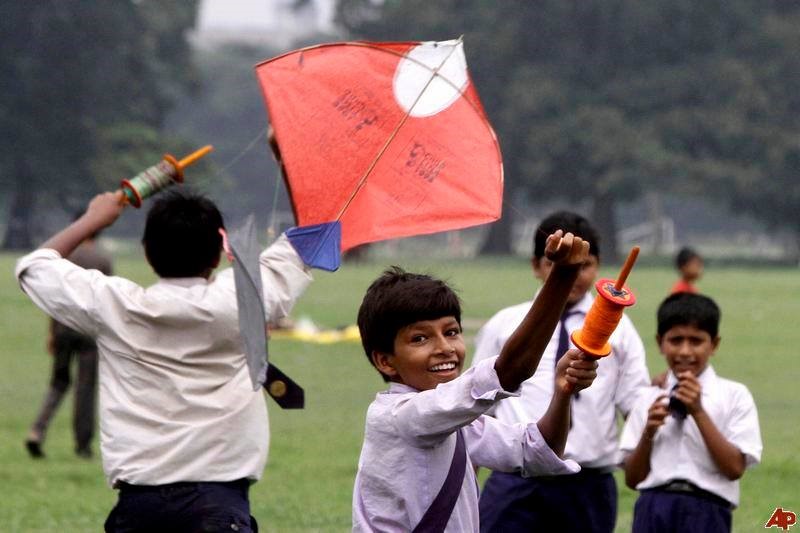
With more than half the population of the country engaged in agriculture and allied activities, the mood of celebration grips the entire nation. Preparations begin weeks in advance. City dwellers book their tickets in advance for a trip to the hometown because they know the last minute surge pricing will burn a hole in their pockets. Those who haven’t been able to go back hometowns take to rooftops and playgrounds armed with colourful kites because the breeze is inviting and the sun is nice and warm.

In every village, farmers clean and paint their homes. Old stuff is taken out and made a bonfire of, on Bhogi the first day of the festival. People dance and sing around the bonfire to keep the last of the biting cold away.  In a run up to the festival the front yard is given a cow dung water wash every morning. Rice flour kolams and colourful rangavallis decorate every threshold in the South.

Haridasu’ sing out their stories. ‘Gangireddu, the decorated bull who is seen as ‘Nandishwara’ dances to drum beats and music in every street. This is an ancient art form of entertainment that brings the community together. Recreational animal sports like cock fighting, jallikattu, kambalaare looked forward to. On the third day of Kanumu, the ancestors are remembered and blessings sought from elders.

Women get busy making snacks like palli laddu, sakkinalu and muruku in the SouthIn the North they make gajak, a popular snackIn the South, cooking Pongal in a mudpot with milk and new rice is an age old tradition. As the milk boils over, everyone calls out ‘Pongalo pongal’ to usher in prosperity into their homes.


Try out these traditional recipes and relish during Sankranti. In keeping with the spirit of gratitude to mother earth, we recommend that you choose organic and locally sourced ingredients, pour out all your love and gratitude in the making of these dishes. Nothing describes celebration more than a delicious and nourishing meal.

Ven Pongal (Also called the Savory Pongal):

Ingredients:

  • 1/2 cup rice
  • 1/2 cup split moong dal
  • Salt to taste

For Seasoning:

  • 2 tbsps ghee
  •  1/2 tsp cumin seeds
  • 1 inch piece of ginger
  • 1 tsp black pepper, coarsely pounded
  • 2 tsps cashew nuts pieces
  • 1 sprig curry leaves

Preparation:

Wash the moong dal and rice and keep aside. In a pot, add a little ghee and roast the dal till the raw flavour disappears. Add five cups of water and some salt. Cook till soft. Mash the dal rice mix well with a ladle. The consistency should be somewhat loose. In a seasoning ladle, take some ghee, add cashew nut and fry till golden brown. Remove and keep aside. In the same ladle, add cumin seeds, grated ginger and curry leaves. When it is spluttering, add to the pongal and stir well. Garnish with fried cashew nuts and serve hot with coconut chutney.


Sweet Pongal:

Ingredients:

  • 1 cup rice
  • 1/4 cup chana dal
  • 1-1/2 cup jaggery
  • 2 cups milk
  • 2 cups water

For Seasoning:

  • 2 tbsps ghee
  • Raisins, cashews, almonds, cardamom

Preparation:

Roast the rice and chana dal separately just till they are hot, not brown. Now boil the milk and water. Once the milk starts bubbling, add the roasted rice and dal and let them cook. In a separate pan, melt the jaggery in half a cup of water till it reaches one string consistency. When the rice and dal are cooked to a porridge like consistency, add this jaggery mixture and switch off the stove. Do not light the stove and cook once you add the jaggery mixture, as the pongal will curdle. (Jaggery and milk when cooked, curdle). Mix all the contents in your vessel, till they blend. In a seasoning spoon, add ghee. Once it melts, add the cashews,almonds, raisins and elaichi. Add this seasoning to the prepared Pongal and serve hot.

You can buy organic ingredients listed in the above recipes from Amazon or BigBasket

Makar Sankranti

Makar Sankranti – India’s Favorite Harvest Festival

Makar Sankranti is one of India’s most popular harvest festivals. Farmers all over India wait till the months of January-February to harvest their crop and express gratitude to god for the year’s harvest.

The name, “Makar Sankranti” is loosely translated to mean “Capricorn Transition”. Thus, Makar Sankranti is celebrated on the day the sun reaches its southernmost dip and then starts moving northwards.

Makar Sankranti is celebrated all over India, and each region has its own unique celebration. For example, the world’s largest gathering of people, the Kumbh Mela, organized in Allahabad (now Prayagraj) is inaugurated with the first dip on Makar Sankranti. Here’s a good photo album on Kumbh Mela.

Punjab:

Punjab celebrates Sankranti as “Maghi”. Taking an early morning dip in the river is considered an essential part of the Maghi celebrations. The Hindus light Diyas or lamps with sesame seed oil, as it is known to invite prosperity and drive away all sin.

Since Maghi is celebrated during peak winter seasons, the food eaten is very rich and high in calories. Slow-cooked Kheer, Khichdi, Jaggery, etc. are main components of the menu during Maghi celebrations.

Rajasthan and Western Madhya Pradesh:

“Sankrant” is a big deal in Rajasthan and MP. Sankrant holds a lot of cultural significance in this region and is the main festival of the year.

A part of the traditional celebrations is to gift 13 married woman any household item. A married woman’s first Sankrant has much value – she is invited to her maternal home along with her husband for a huge feast. Sweets such as Til-Gud Laddu (Sesame-Jaggery Laddu) are prepared and distributed among family and friends.

Kite-flying is considered a part of the tradition in this region. The sky is filled with colorful kites, with people of all ages engaging in kite-cutting contests.
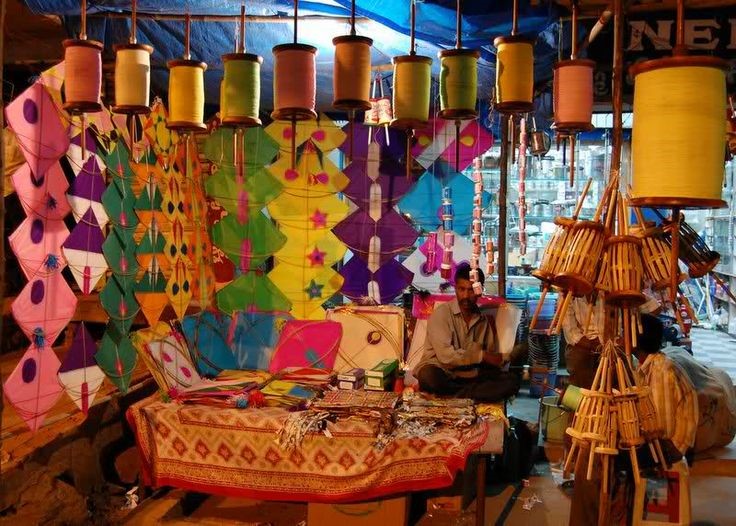
Kite StoreA good old kite store in Rajasthan

Tamil Nadu – 4 days of Pongal

Sankranti is celebrated as “Pongal” in Tamil Nadu. It is celebrated across four days, with each day dedicated to a different god associated with agriculture.

The first day is celebrated as Bhogi wherein farmers express their gratitude to Lord Indra. The other three days are Thai Pongal, Maattu Pongal and Kaanum Pongal.

Pongal is a delicacy prepared as Prasadam for the deities. It is incredibly simple to make and takes about 30 minutes. On Pongal day, women of each neighborhood come out and cook pongal on the streets, marking a celebration of hope, abundance, and sharing.
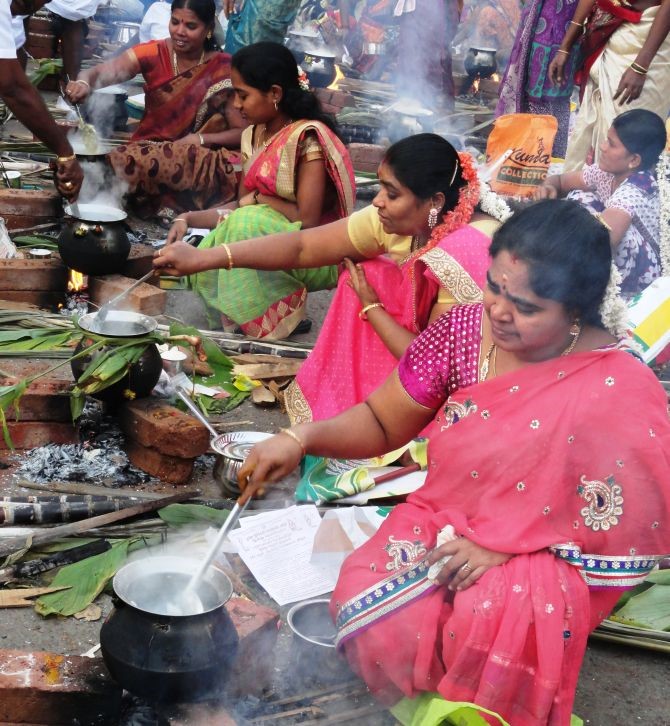
Women making pongal dishWomen participating in a community pongal-cooking celebration in Dharavi, Mumbai.

 Odisha

Odisha celebrates Sankranti with much enthusiasm and faith. Deities are offered Prasadam prepared using uncooked newly harvested rice, jaggery, coconut, banana, sesame, rasagola, etc.

Apart from this, devotees at the Konark temple pray with much intensity as the sun starts its northward swing. Apart from the usual traditions, there are also a few unique traditions here. For example, people reaffirm their friendship with their best friends during Sankranti.

Assam – Bihu

Assam celebrates Bihu which signifies the end of the harvesting season for the year. The festivities of Bihu last up to a week and are adorned by bonfires and colorful Rangolis drawn everywhere.

Traditionally, the youth build huts made out of bamboo, leaves, etc., and then feast in those huts. Then, the next morning those huts would be burnt.
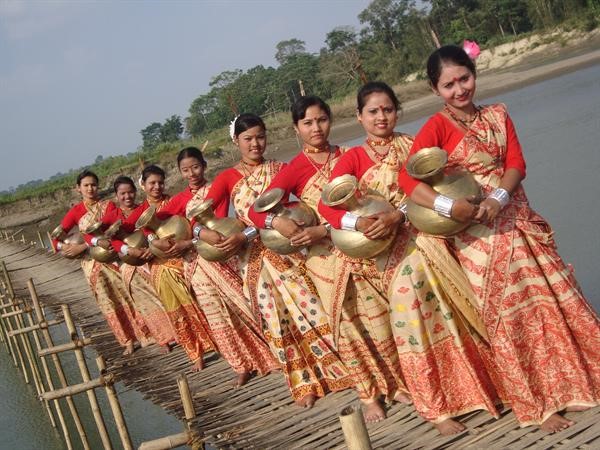
Assam sees and tastes a lot of delicacies during Bihu – such as a traditional Assamese cake made using Bamboo. Read more about Shunga Pitha

Gujarat

Gujarat sees a lot of vibrance for Sankranti. It is celebrated for two days in this region with the first day being called “Uttarayan”. Skies in major cities are filled with kites of various sizes and shapes. There is a fierce kite cutting competition, and the cord used to fly kites is usually strengthened.
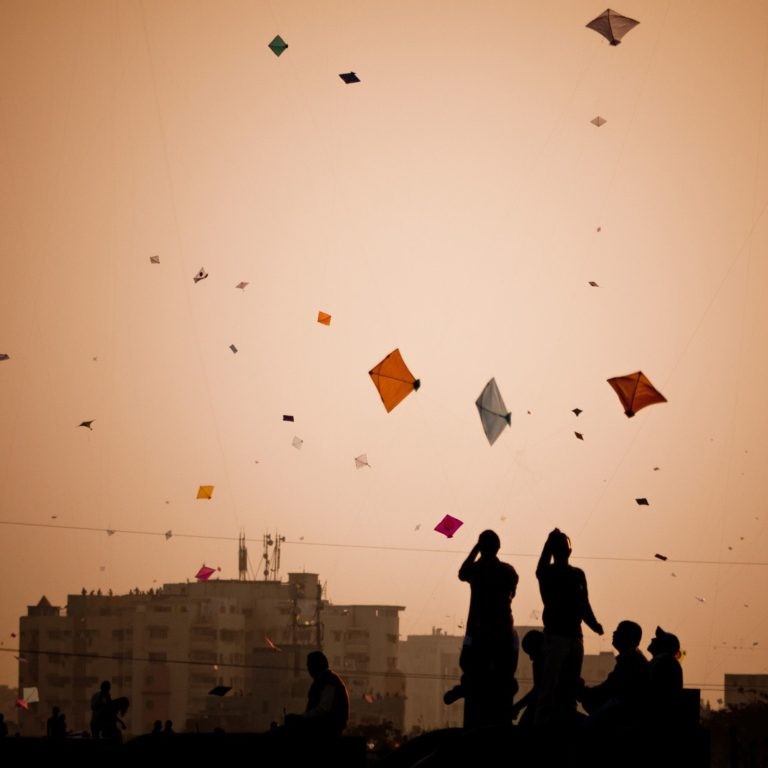
A Common Sight in Gujarat Throughout the Month of January

Winters in Gujarat are cold as well, which means that a lot of cold weather food is prepared during Sankranti, ranging from simple snacks like Chikki, to complicated dishes like Undhiyu.

 Maharashtra

 Makar Sankranti is celebrated in Maharashtra for two days. There is a lot of emphasis on community, hence Maharashtrians distribute Til-Gul Laddus, and wish for the other person to utter only sweet words for the year. Apart from these laddus, Maharashtrians also prepare another delicacy called Puran Poli. You can try the recipe for Puran Poli here.

 Delhi & Haryana

This region views Sankranti as one of the main festivals of the year.

Married women are visited by one of their brothers who brings a gift of warm clothing for her family. She offers sweets to her brother, such as Churma.

Karnataka

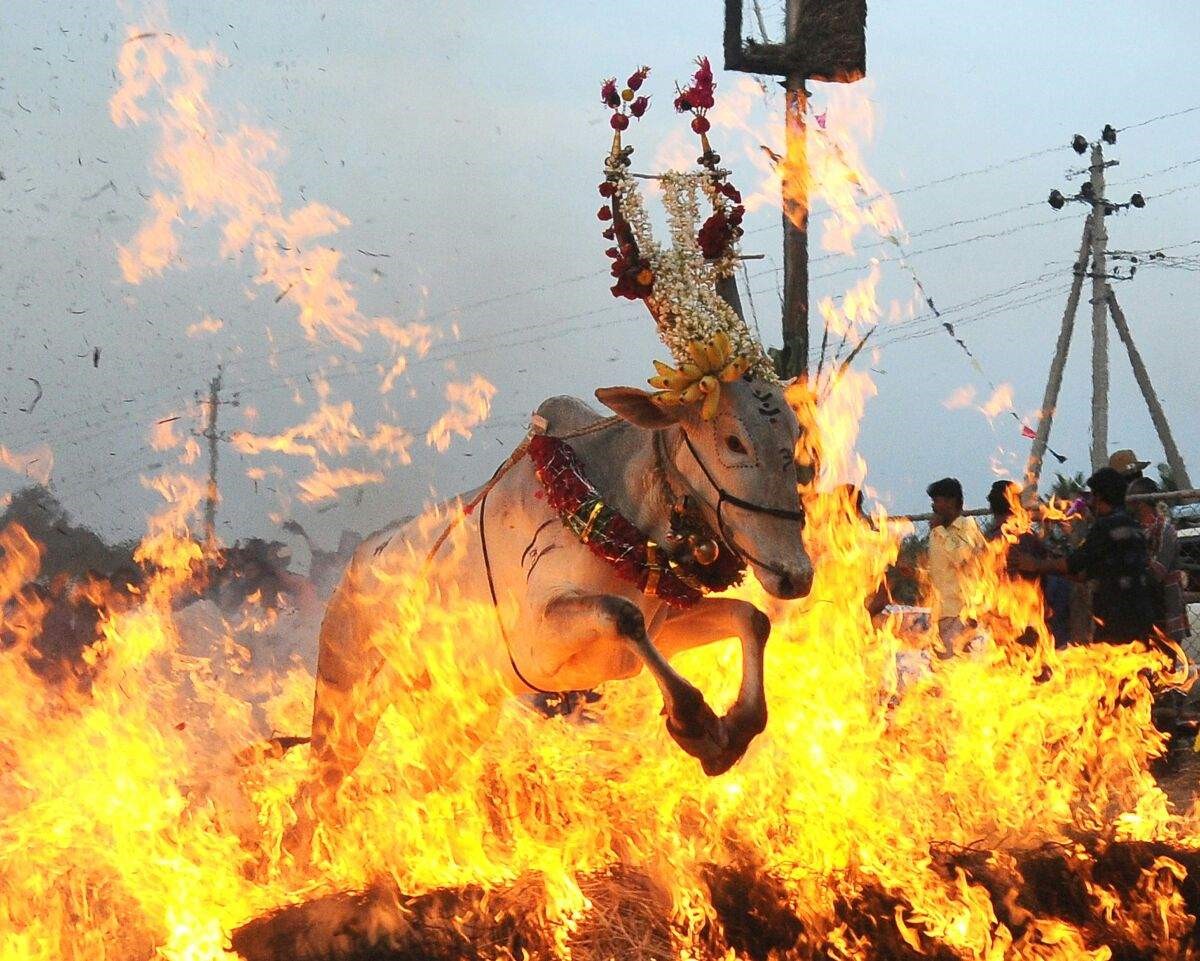
For farmers in Karnataka, January-February bring about Suggi, which is the harvest festival celebrated here. In a ritual called Elle Burodhi, girls wear new clothes and visit the homes of friends, family and neighbors with an offering of a small plate of Sankranti offerings. The plate generally consists of white sesame seeds mixed with fried groundnuts, dry coconut and fine cut jaggery.

Among other rituals such as kite flying, one of the most important rituals involves the display of cows and bulls in colorful attire in open fields. The cows are dressed up for the occasion and are taken out for a procession. They are also made to jump over an open fire. This is quite common among farmer communities in rural Karnataka.
Nepal

India’s little neighbor celebrates Sankranti as Maaghe Sankranti. Celebrations involve lots of pomp and show, along with a ton of food cooked as offerings to deities distributed among friends and family. Here’s a very good blog on an authentic Maaghe Sanranti experience in Nepal.

Do add comments about your own cultural practices of celebrating Pongal/Sankranti/Lohri/Bihu. Daana, and all our farmers wish you a very happy Makar Sankranti!

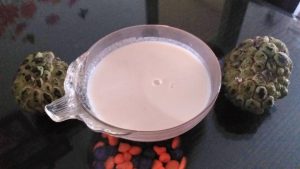
Sitaphal Kheer

Sitaphal (Custard Apple) Kheer


Dussera got over last week after a glorious Navaratri celebration all over the country. Navaratri in Tamil households involves lots of preparation from arranging and decorating the Golu to making prasadams (bhog) every single day – twice daily.

We make lots of Sundals (which is a dry salted salad-type preparation with different lentils) as prasadam. People also make different sweets to induce some variety to the prasadams. This time I tried Sitaphal (Custard Apple) Kheer as part of my prasadam. This is the season for custard apples and I got quite tempted to try out this recipe. It turned out to be pretty good and I am sure people who relish kheer would love this one.


Ingredients:

1.5 lts whole milk

18 tsps sugar

pulp of 5 custard apples

Almonds, Pistachios, Cashews, Raisins for garnishing

Method:

Boil milk in a large pan/bowl. After the first boil, add sugar and stir it occasionally till the milk starts reducing. Extract the pulp from all the custard apples by removing the seeds-its quite a task..:). Grind the pulp to a smooth paste and keep it aside.

Once the milk reduces to half its quantity, it will turn light pink in colour. Turn off the gas, add the fruit pulp and stir well. Finally you can garnish it with almonds, pistachios, cashews and raisins, roasted in ghee. This kheer tastes great when served chilled.

Now that fresh custard apples are available in abundance during this season, this recipe is definitely worth a try!!

Cheers!!!

-Bhuvana


Mango Kheer

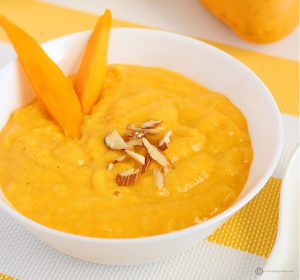
Mango Kheer


Our favourite fruit, Mango, will fast dwindle away in the next 2 weeks with the summer passing and the arrival of Monsoon. Many sweets, salads and dals are made out of different varieties of Mangoes. The Mango Kheer is a unique dish which tastes excellent, especially when served chilled. Let’s take a look at this easy recipe.

Ingredients

Pulp of 2 ripe Mangoes (preferably Alphonso)

1 ltr whole milk

11 teaspoons of sugar

1 tbsp rice

Cashews

Almonds

Raisins

1 tsp ghee

Method

Boil the milk on medium flame. Add sugar. After adding sugar when the milk starts boiling, add the raw rice. Let the rice cook in the milk. Keep stirring till the milk starts reducing. It will turn to a very light pink colour. Turn off the gas and cool it to room temperature. Blend the mango pulp into a smooth puree. Add this to the cooled milk and mix well. This recipe turns out to be mildly sweet. You can adjust sugar according to your taste even at the end. Garnish with a few almonds, cashews and raisins roasted in ghee. Serve this kheer chilled.

Enjoy the Mango Kheer before the season of Mangoes end!

Cheers!!!

-Bhuvana


Aam Panna

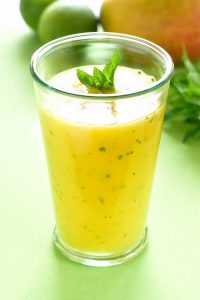
Aam Panna


Summer is here in full swing and you can see people gathering at Lemon Juice stalls, Coconut water and Cucumber stalls to quench their thirst and also cool their bodies. It is very important to keep ourselves hydrated in order to avoid heat strokes. Aam Panna is one such cooler which helps in hydrating and also cooling our body.

Here is a recipe worth trying…

Ingredients:

3 Raw Mangoes

Rock salt

4 tbsps Jaggery

3 cups Water

1/2 tsp Roasted Cumin seeds powder

Few Mint leaves

Method:

Peel the raw mangoes and slice them into small pieces. Cook the slices in 3 cups of water. When the mango slices become soft, add the jaggery and switch off the flame after 2 minutes. The jaggery will dissolve in the hot mango solution. Now add rock salt, roasted cumin seeds powder and the mint leaves. Cool it by refrigeration. Add water and ice before serving. You can also add cardamom for flavour.

Enjoy this delicious drink  and cool off the summer..:)

Cheers!!!

– Bhuvana


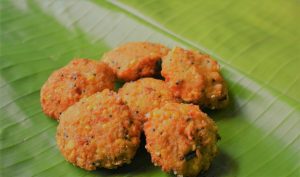
Mix Dal Vada

Mix Dal Vada


What do you make when you invite people for tea at your place? Thinking of making a snack for tea time always gets you into a chagrin – should it be a lavish tiffin or just namkeen ? Well, stop thinking and try this Mix Dal Vada which is a crispy protein rich snack, a big hit with the kids and am sure the guests too 🙂

Ingredients

Note: Please use a small cup, or you can even measure with a big serving spoon

1 cup Boiled Rice

1 cup Toor Dal

1 cup Moong Dal

1 cup Urad Dal

1 cup Chana Dal

1 tbsp chopped coconut

2 tsp whole pepper

4 -5 Red chillies

Curry leaves

Asafoetida

Salt acc to taste

Oil for frying

Method

Soak the boiled rice and all the dals together for an hour along with the red chillies. Drain the water and grind them into a coarse batter while adding salt. Now that the batter is ready, add freshly chopped coconut pieces, curry leaves,whole pepper and asafoetida to this. Mix well. Fry the vadas in oil and serve with any chutney or sauce of your choice.

The crunchy vadas with whole pieces of coconut and pepper make a good evening snack. I tried coriander chutney with this and it tasted great. You can add a twist to this recipe by giving a tadka (seasoning) of mustard seeds and hing(asafoetida) to the batter before frying.

Use Organic Dals and Cold Pressed Groundnut/Sunflower Oil for the best taste. You can find these ingredients on Amazon here

Cheers!!!

-Bhuvana