Government Forecasts Record Food Grain Output in the Crop Year of 2018

Government Forecasts Record Food Grain Output in the Crop Year of 2018

Crop production forecasts are commonly understood as an important tool in preparing the food balance sheets of the country. They also give a fair idea regarding food production shortfalls.

So when the Agriculture Ministry, Government of India forecasts a record food grain output in this crop year ending in June 2018, in view of the good rainfall received in the country, the clouds of food price inflation and temporary food insecurity recede. Rice production is pegged at 1.2% higher than last year at 110.11 million tonnes. How accurate will this forecast be? Only time will tell.

By the way, India ranks 66 in the Global Food Security Index of 2012, despite PDS.

Read the full story here:


Vegan Fish Curry at the Natural Food Festival

Vegan Fish Curry at the Natural Food Festival

I kid you not. Before you guffaw or roll your eyes. Here is the video proof. (There is more about betel dosa at the end of this post)

The Natural Food Festival in Hyderabad happened on Feb 17 and 18. I took the tribe along. Humera and Rayyan were motivated by the food, Rajaa was there to get nice pictures and I was curious. I swear that the millet and jaggery chocolate brownies takes the cake. Put it on your bucket list.

So, it turns out (you didn’t watch the video, did you?) the vegan fish curry was a vegan (fish-less) curry made with the same spices, and vegetables. Yes, I tried tasting it and I finished all of it. It was lip-smacking-ly goooood. But on to the main story, after all, isn’t all food natural? Valid point. Chew on a millet cracker while we explore this.

The natural food festival, should have really been called the Slow Food festival. As opposed to fast food…. food that is chemically laced, unhealthy and more often than not, unethically, factory produced. Food that is heavily promoted by multinational food conglomerates. Slow food is nutritiously tasty food cooked from traditional recipes from local, organically grown crops and grains and naturally raised animals.

It was a surprise in many ways. First, it is not very often that a government decides to promote Natural Foods. We sauntered in at the closing bell of the last day. I was fully expecting to see a deserted place. No, I was surprised !!

DDS
There were many familiar faces. Deccan Development Society was there. For those who came in late (and read Phantom comics), a documentary film maker, Sateesh decided to go native and returned to his village in Zaheerabad district a few decades ago. He started to work with the local farmer women and soon developed an amazing society of empowered women who grow, negotiate, think, make movies and generally give everyone a tough time. Here is one of them talking about their exhibits

Litti Choka
There were quite a few participants from really far off places.  There was this young woman from Siliguri (the pitstop for Darjeeling). She gave us a taste of Litti Choka. This is a dough ball made with whole wheat and stuffed with sattu and other spices and herbs. It is normally roasted over wood fire and served with Ghee . It is best eaten with aloo bharta or baingan bharta accompanied with a generous portion of curd.

Millet Snacks
And there was a phenomenal spread of Millet snacks. Remember the jaggery and millet chocolate brownie I mentioned?? This is the video I shot.

I will update this post later with more pictures from the festival.  I hope to return next year with more of the gang and on both days. Don’t miss it the next year.

– Farhan

India Leads in Number of Organic Producers

India Leads in Number of Organic Producers

More than 30% of the world’s organic producers hail from India, according to the World of Organic Agriculture Report 2018 published this month. Of the total 2.7 miliion organic producers in the world, 8,35,000 organic producers are Indians. This makes it the country with the largest number of organic producers. In terms of numbers, it is way ahead of other countries. Uganda comes second with 210,352 producers and Mexico is third with 210,000 organic producers.

On an average each organic farmer in India  has a farm holding of less than two hectares. Most of these are marginal farmers. In India, the area under certified organic cultivation, is only 2.59 per cent (1.5 million hectares) of the total area (57.8 million hectares).

For once China is nowhere in the scene, rather it is battling with heavy pesticide pollution of its land and water resources. This year China ranked first in the list of world’s worst food safety violation offenders.

The 19th edition of the World of Organic Agriculture report claimed that organic agriculture area, and its products value has increased. The data was collected from 178 countries by the research Institute of Organic Agriculture (FiBL), the State of Sustainability Initiative (SSI), and International Trade Center. The report was released during the 2018 edition of BIOFACH, world’s most well known organic agriculture show, held in Germany. Read more

Daana procures produce from small and marginal farmers and offers them a fair price.

Cold Pressed Oils Can Up Your Immunity

Cold Pressed Oils Can Up Your Immunity

Winter is on its way out in most parts of the country and the ‘now warm-now cold’ weather is giving many of us the sniffles. You pack away the warm blankets one day, only to pull them out the next. The first to be attacked by the flu are those with low body immunity. It is at times like these that we wish our immunity was higher and our body constitution stronger to weather the seasonal changes.

Your grandparents and other family elders would have probably told you that they were much healthier than you even though they didn’t have such a variety of things to eat. Hearts of hearts we have envied them and wondered about the secret of their good health.

There are many ways to boost the body immunity – exposure to sunlight, regular intake of greens, fruits, vegetables, onion, ginger, garlic, probiotics and fermented foods. Consuming cold pressed oils is also one way to boost your body immunity. Your grandparents will vouch for this one, but the term cold pressed wasn’t around when they were young.

Cold pressed oils give us immune benefiting components, antioxidants and substances that trigger the healing process.

So, how can we slip in cold pressed oils in our diet regimes? Here are a few suggestions:

  • Hot soups are welcome when you have the sniffles. Add teaspoon of cold pressed oil to stir fry the veggies that go into the soup. It will give your soup some texture and also make it healthier.
  • Salad dressings are another super easy way you can add cold pressed oils to your diet. There are many delicious salad dressings that are best made at home. Choose one that suits the taste buds of your family and toss up a tasty salad.
  • Homemade mayonnaise is another way you can use cold pressed oils. Flavourful and creamy mayonnaise can be had with sandwiches and salads.
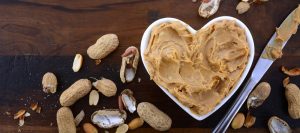
  • Make peanut butter at home. Add a tablespoonful of cold pressed groundnut oil for extra creamy smoothness to the peanut butter.
  • And the best way to use cold pressed oils I would say, is to have nalla kharam or molaga podi or gun powder as it is popularly called, with hot rice. Normally we use ghee with our molaga podi, but you can take half ghee and half cold pressed oil. Heat it in a pan, add some mustard seeds and asafoetida. When the mustard splutters, drizzle this ghee-oil mix on the hot rice. Sprinkle a tablespoonful of molaga podi, mix it and enjoy. Out with the sniffles!

When we are healthy and well rested, we feel better and do better. We are also kinder, smarter and more productive. So eat healthy and live better!

Sujata C

Daana cold pressed oils are organic and procured from small and marginal farmers. Daana Blog is produced by Daana Farmers Network to promote understanding about Naturally grown, Organic food. Support us by buying your grains, oils and staples from our farmers through Amazon, Bigbasket or directly from Daana.in.

Beejotsav held in Hyderabad

Beejotsav held in Hyderabad

When farmers take up cudgels for Mother Earth, you know there is something good going. The Desi Seed Festival held at the Ramakrishna Mutt, Domulguda, Hyderabad elicited an enthusiastic response from seed conserving farmers. The event was organised by SAVE ( Society for Awareness and Vision on Environment) in association with independent organisation Bharat Beej Swaraj for three days from Feb 3-5. Thousands of farmers from nearby states Karnataka, Maharashtra, Chattisgarh thronged the venue to listen to natural farming exponent Subhas Palekar and other practitioners.

Over 5000 varieties of desi seeds were exhibited. Desi seeds were also distributed free of cost to farmers.

Watch this video to know more:

https://www.youtube.com/watch?v=pJ6-Weq2SBw

Biryani: The Dish that Devours Boundaries

Biryani: The Dish that Devours Boundaries

There are two must-dos for any visitor who comes to Hyderabad – eat biryani and buy pearls. The funny thing is both these items don’t originate here. Hyderabad is not on the sea coast and pearls are not natively found here and despite a 400 year old association with Hyderabad, biryani did not originate here.

If you were to plot a route for biryani, you will need the map of Asia, for that is what it is – an Asian dish popular in its varied forms. It is probably the only single pot dish that has travelled from region to region devouring boundaries on its way and picking up the flavours of the places it passed.

Biryani is known to have been brought to India by Taimur-e Lang, the lame but fierce Mongol ruler who invaded India towards the end of the Tughlaq dynasty. It is very interesting to track the spread of biryani in India. The dish took on the flavours and and aromas peculiar to each region and evolved into a variety of region specific biryanis – the Kashmiri, the Awadhi or Lucknowi, the Malabari, the Arcot biryani, Calicut biryani and the Hyderabadi biryani, each  unique and delicious in its own way.

Dig into history: People say biryani was the Nizam’s gift of love to Hyderabad, but the history of the Hyderabadi biryani predates the Nizams. Legend has it that Mumtaz Mahal, wife of Shah Jahan and mother of Aurangzeb, cooked up the recipe of this meat and rice dish to quell the hunger pangs of marching soldiers who had to walk long distances.

It is possible that Aurangzeb brought the biryani to Hyderabad along with him when he came down to conquer the Deccan and his army laid siege for nine months camping in the Fateh Maidan to conquer the Golconda Fort.

Yet another piece of history says that the nomads of West Asia came up with this dish. They would mix rice, meat and spices in a pot and bury it in the sand. Cooked by the heat of the sun, the biryani would be ready when the pot was dug up after a few hours. Sounds incredible, doesn’t it!

We talked about pot cooking in our last post. We take it forward here with this recipe for a chicken pot biryani. Try it out one evening and look out for the compliments!

Sujata C

You don’t need basmati rice for this recipe. Use Organic Sona masuri Rice and Cold Pressed Groundnut Oil for the best taste.

You can find these ingredients on Amazon here

Know your Organic Labels

Know your Organic Labels

Love has no labels but bottles, jars and grocery packets do. Labels make promises and raise expectations. Words like “Natural”, “Pure” and “100%” are used loosely and liberally on packets of food items. When you are out shopping for organic food you must look for authentic labels. Here are a few labels to keep an eye out for:

Indian Organic is a mark of assurance for organically grown food and processed food made in India. The certifying agency and regulatory authority is APEDA (Agriculture and Processed food products Export Development Authority). This is an accredited certification and legally valid for importing food products. APEDA runs under the National Programme for Organic Production (NPOP).  All Indian organic products must display the India Organic logo for customers to easily identify certified products.

Indian Organic label is recognised by the US and the European Union.

Food Safety and Standards Authority of India(FSSAI) launched a new logo for organic products in Decemeber last year.

Indian Organic Standards:

Decoded further, the Indian Organic label means:

  • The land from where the produce is obtained, has been upgraded for organic farming and no chemicals are used in the farm practices.
  • All inputs like fertilisers and pesticides are and must be natural.
  • No genetically modified inputs or Irradiation technology should be used.
  • All the farming practices and food processing techniques – physical, biological and mechanical must be verifiable.
  • No contamination from neighbouring farms must be present.
  • The farm must follow sustainable practices.

The organic certification is not easily obtained and is quite an intimidating exercise.  The farmer has to approach agencies that give the certification. The NPOP has a list of third party accredited bodies like INDOCERT, ECOCERT etc who carry out the certification procedure. A farm is given certification after two years of organic farm practices. A fruit orchard is given certification after three years of organic farm practices. A dairy unit on certified land can get it in 90 days, whereas a food processing unit can get it in one day provided all the biological, physical and mechanical inputs are convincing.

The organic certification for any produce is also valid for three years and must be renewed after that.

An individual farmer spends anywhere between Rs 25,000/- to Rs 40,000/- for organic certification. A group of farmers who pool their land holdings for certification may spend between Rs 40,000/- to Rs 1,00,000/-.

On some products you may also find the label of PGS India Green and PGS India Organic. PGS India Green indicates that the fields from where the produce is sourced are in the process of conversion to organic and PGS India Organic means that the produce is obtained from fields are completely organic. PGS stands for Participatory Gaurantee System for India. It is a decentralised organic farming certification system run by the Ministry of Agriculture and Farmers’ Welfare, Government of India. 

International labels:

Some of the other international organic labels are the USDA and Organic EU.

USDA stands for United States Department of Agriculture and USDA Organic seal means that the product has been certified organic and contains 95% or more organic ingredients.

Presence of Organic EU logo means Eurpoean Union certification standards were followed while growing or making the product.

This is the new logo of Organic EU.

Logos give a visual identity to the organic farm sector and differentiate them from the conventional farm products, apart from making it easy for you and me to pick the food of our choice.

Sujata C

FYI: All of Daana’s products are certified organic. Order them from Amazon by clicking here

 

Hello world!

Welcome to WordPress. This is your first post. Edit or delete it, then start writing!

Good Health is Cold Pressed

Good Health is Cold Pressed

Ola acquired Foodpanda two days back. So now not only will they drive you home, they will also deliver hot food at your doorstep. Away from the hustle and bustle of the food delivery apps world, there is a quiet revival of the traditional oil mill all over the country – not in remote villages , but in the heart of happening cities. It appears to have made a silent comeback after seven to eight decades much to the delight of discerning consumers like Uma who lives in Yapral, Hyderabad. Since the past six months, she has been making a monthly trip to the traditional oil mill (ghani in hindi, ganuga in telugu) near her house to get fresh cold pressed oil.

Good old ‘ganuga’

Prabhakar is the lone ‘ganuga’ operator in the region who uses two bullocks to run his mill and prepare oil for select customers. He is from the oil crushers’ community, who took to selling garments when his livelihood of traditional oil milling was no longer profitable. Couple of years back, he chanced upon a meeting of Subhas Palekar,  the ‘rishi of  krishi’ in his village, advocating traditional food and farm practices. This proved to be a turning point in his life. Everything that Palekar said about chemical farming resonated with him. He had heard about the ill health caused by adulteration and chemicals in food. Prabhakar decided to revive his ancestral occupation and set up his ganuga in Balaji Nagar at Yapral, Hyderabad. Prabhakar says oil from a traditional mill is especially good for diabetics and heart patients.

Prabhakar at work
Photo courtesy: Telengana Today

Time for mindful eating

You can imagine what wonderful meals Uma must be cooking for her family, if she takes so much care about the cooking oil. While many of us may not have access to a ghani near our house, we can make the switch to mindful eating by including cold pressed oils in the shopping list.

The fast pace of our lives has taken its toll on our health. We tend to be mindless when it comes to something as basic as food. We just need to slow down and bring our awareness to things around us and the food on our plates. You can make mealtimes more interesting by talking to your children about the food they are eating. Even the most ordinary everyday meal has something extraordinary about it, if we chose to think about it. This way we can help one another become more mindful and thus make wiser choices about our health, our food, our farmers and the environment.

If you know of any traditional oil mill becoming operational in your locality, do drop a line in the comments section. We would love to spread the word.

Sujata C

Daana.in sells cold pressed oils that you can order conveniently from Amazon.in

The Unrefined Truth About Refined Oils

The Unrefined Truth About Refined Oils

There is an open secret about refined oils that many of us still don’t know. It is the  process oilseeds undergo to acquire the state of odourless, colourless ‘refinedom’. To begin with, all sorts of seeds are used in refined oils – good, bad and even spoilt. When you do a quick internet search of the refining process of cooking oil the results throw up words like extraction, neutralizing, bleaching, deodorising etc. Intuitively, you know there is something wrong when they are neutralising, bleaching and deodourising your cooking oil. Dig a little deeper and your doubts are confirmed.

Bathed in petroleum solvent

While the term extraction seems harmless, seed pulp is bathed in a petroleum based solvent called hexane, to pull out the maximum amount of oil possible. (Is that a safe thing to do, is a logical question that comes into our minds.) Okay, so they use food grade hexane, but traces of it are likely to remain in the oil. Many studies including one conducted by the Royal Society of Chemistry of UK have confirmed this. Nausea, headache, blurred vision, muscle weakness and numbness of the extremities are some of the side effects of ingesting even trace amounts of hexane.

Sizzling temperatures

Very high temperatures (upto 180 degree C) are used in the refining process to remove colour, odour and bitterness, causing the molecules to become unstable, more prone to oxidation and creation of free radicals – the root cause of a host of diseases including cancer, Alzheimer and Parkinson. Along the way the oilseeds are stripped of all the natural fatty goodness – vitamin E and minerals and antioxidants.

Chemical wash

Neutralising is done to remove any impurities in the oil by adding caustic soda and soda ash (Don’t we shun the cooking soda to soften the dal because it will kill all the nutrients).It is then purified and bleached to improve the colour. (The only thing we associated bleach with was sanitation and laundry.) The oil is also deodourised to get rid of ‘unusual’ or chemical smells. (I thought only bathrooms need deodourising.) At the end, they add some preservatives to improve shelf life.

That’s a complete cocktail of chemicals that the oilseeds have been processed with. The refining process leaves behind a trail of chemicals which get into our body and cause untold damage to the internal organs.

A dash of GMO

It is also a common practice among oil manufacturers to add cottonseed oilseed in most vegetable oils for volume. These seeds come from BT cotton which is a GMO seed (and the consumers will never know). Recent research reports in respected medical journals in the Indian Heart Journal (IHJ), the official peer reviewed open access journal of Cardiological Society of India (CSI) and the Journal for Preventive Cardiology have carried reports on cooking oils and recommend unrefined oils for the presence of bioactive compounds flavours and Vit E content.

This only adds momentum to the ‘ditch-the-processed-food movement’ and substantiates the fact that our ancestors knew better and enjoyed better health as they were consuming oil extracted by the bullock driven mill.

Keep watching this space for more on topics like this and others.

Sujata C

Daana supports the trend against refined oils and urges you to switch to organically grown and cold pressed oils. Order them from Daana.in or Amazon.in today.