How to Beat the Exam Blues

How to Beat the Exam Blues

Happiness they say is your last exam paper! March is the month for exams for most students in India. Nearly one and a half crore students are appearing for board exams in India this year after a gap of seven years. It is a highly stressful time. Revisions, portion, tears, meltdowns, night outs, burn outs – conversations revolve words like these in most homes. Parents are busy helping their children stay motivated and confident.

We all know that what you eat can affect your mood, alter stress levels and promote calmness. We tend to go on food binges under pressure and students are no different. Under the influence of examination stress there will be significant increase in food intake, and a tendency for high fat and sugary snacks. This can be counter-productive as unhealthy meals can add to stress levels.

March is the month when the temperatures begin to rise in our country. This is good for bacterial growth and so the chances of getting an infection are very high. It is also the time when measles and chicken pox are rampant. To begin with give only fresh, homemade food to your children. Avoid all food from outside to safeguard them from any stomach bug. Water should be fresh and filtered.  Don’t make any fried food items as these tend to make the stomach heavy. Avoid food that will give a sore throat and goes without saying, no carbonated drinks and ice cream please.

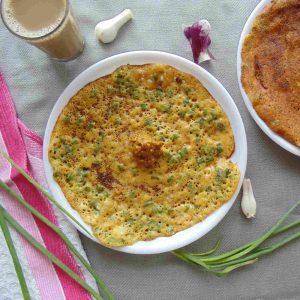
When children are studying food gets digested faster and they tend to feel hungry often. Give smaller meals more frequently rather than three large meals. Make whole grains and pulses a part of every meal.  Add plenty of greens to meals and snacks. (How does palak dosa sound?)
Add a fistful of nuts, plenty of fruits and fruit juices to the diet to provide extra energy and keep them active. Tea and coffee can be had in moderation. A glass of milk in the morning and at bedtime will be good. This will give good sleep at night. This is as far as physical health is concerned.

To make sure that children are mentally composed and not having panic attacks due to exam fears, help them maintain a proper study routine. Give tips on how to revise and write the exam. Keep them off television, Internet and social media as far as possible as they can take the mind away from studies. For rest and relaxation they can play board games or any light sport. Music is also a great stress buster. Yoga helps improve concentration, apart from helping relax the muscles.

If your child is going for tuitions or combined studies along with friends, make sure he/she is not coming under peer pressure as it can be detrimental to his performance or hit his self confidence. Research has shown that 30% students going for board exams get into substance abuse (cigarettes, alcohol and even drugs) due to the stress.

Keep the house well ventilated. Put your essential oil burner to good use now. Lavender, rose, ylang ylang and vetiver oils give out wonderfully soothing aromas to calm the mind. Most important, be there for your child as a friend and guide. This is the time they need you the most to help them do their best.

Sujata C

Daana brings you wholesome, organic cereals and pulses at the click of a button. Place your order here.
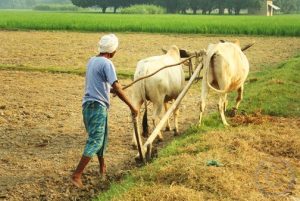
Government Forecasts Record Food Grain Output in the Crop Year of 2018

Government Forecasts Record Food Grain Output in the Crop Year of 2018

Crop production forecasts are commonly understood as an important tool in preparing the food balance sheets of the country. They also give a fair idea regarding food production shortfalls.

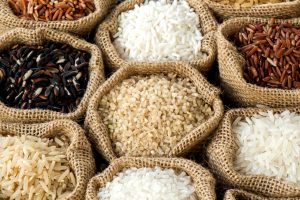
So when the Agriculture Ministry, Government of India forecasts a record food grain output in this crop year ending in June 2018, in view of the good rainfall received in the country, the clouds of food price inflation and temporary food insecurity recede. Rice production is pegged at 1.2% higher than last year at 110.11 million tonnes. How accurate will this forecast be? Only time will tell.

By the way, India ranks 66 in the Global Food Security Index of 2012, despite PDS.

Read the full story here:


India Leads in Number of Organic Producers

India Leads in Number of Organic Producers

More than 30% of the world’s organic producers hail from India, according to the World of Organic Agriculture Report 2018 published this month. Of the total 2.7 miliion organic producers in the world, 8,35,000 organic producers are Indians. This makes it the country with the largest number of organic producers. In terms of numbers, it is way ahead of other countries. Uganda comes second with 210,352 producers and Mexico is third with 210,000 organic producers.

On an average each organic farmer in India  has a farm holding of less than two hectares. Most of these are marginal farmers. In India, the area under certified organic cultivation, is only 2.59 per cent (1.5 million hectares) of the total area (57.8 million hectares).

For once China is nowhere in the scene, rather it is battling with heavy pesticide pollution of its land and water resources. This year China ranked first in the list of world’s worst food safety violation offenders.

The 19th edition of the World of Organic Agriculture report claimed that organic agriculture area, and its products value has increased. The data was collected from 178 countries by the research Institute of Organic Agriculture (FiBL), the State of Sustainability Initiative (SSI), and International Trade Center. The report was released during the 2018 edition of BIOFACH, world’s most well known organic agriculture show, held in Germany. Read more

Daana procures produce from small and marginal farmers and offers them a fair price.

Cold Pressed Oils Can Up Your Immunity

Cold Pressed Oils Can Up Your Immunity

Winter is on its way out in most parts of the country and the ‘now warm-now cold’ weather is giving many of us the sniffles. You pack away the warm blankets one day, only to pull them out the next. The first to be attacked by the flu are those with low body immunity. It is at times like these that we wish our immunity was higher and our body constitution stronger to weather the seasonal changes.

Your grandparents and other family elders would have probably told you that they were much healthier than you even though they didn’t have such a variety of things to eat. Hearts of hearts we have envied them and wondered about the secret of their good health.

There are many ways to boost the body immunity – exposure to sunlight, regular intake of greens, fruits, vegetables, onion, ginger, garlic, probiotics and fermented foods. Consuming cold pressed oils is also one way to boost your body immunity. Your grandparents will vouch for this one, but the term cold pressed wasn’t around when they were young.

Cold pressed oils give us immune benefiting components, antioxidants and substances that trigger the healing process.

So, how can we slip in cold pressed oils in our diet regimes? Here are a few suggestions:

  • Hot soups are welcome when you have the sniffles. Add teaspoon of cold pressed oil to stir fry the veggies that go into the soup. It will give your soup some texture and also make it healthier.
  • Salad dressings are another super easy way you can add cold pressed oils to your diet. There are many delicious salad dressings that are best made at home. Choose one that suits the taste buds of your family and toss up a tasty salad.
  • Homemade mayonnaise is another way you can use cold pressed oils. Flavourful and creamy mayonnaise can be had with sandwiches and salads.
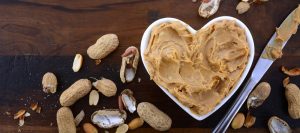
  • Make peanut butter at home. Add a tablespoonful of cold pressed groundnut oil for extra creamy smoothness to the peanut butter.
  • And the best way to use cold pressed oils I would say, is to have nalla kharam or molaga podi or gun powder as it is popularly called, with hot rice. Normally we use ghee with our molaga podi, but you can take half ghee and half cold pressed oil. Heat it in a pan, add some mustard seeds and asafoetida. When the mustard splutters, drizzle this ghee-oil mix on the hot rice. Sprinkle a tablespoonful of molaga podi, mix it and enjoy. Out with the sniffles!

When we are healthy and well rested, we feel better and do better. We are also kinder, smarter and more productive. So eat healthy and live better!

Sujata C

Daana cold pressed oils are organic and procured from small and marginal farmers. Daana Blog is produced by Daana Farmers Network to promote understanding about Naturally grown, Organic food. Support us by buying your grains, oils and staples from our farmers through Amazon, Bigbasket or directly from Daana.in.

Forgotten Super Food: Hand Pound Rice

Forgotten Super Food: Hand Pound Rice

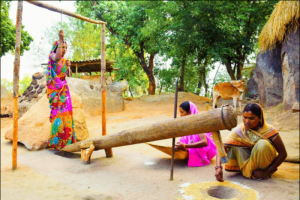
In a small tribal village Hansuli in Chattisgarh, few women farmers’ groups are trying to revive a 300 year old tradition of hand pounding rice. They are also able to generate additional income in the process.

Currently, rice mill machine use rubber rollers to produce a rice which looks like hand pounded rice. But it is not the same thing because the heat created by milling and pounding machine changes the taste and also removes the  micro nutrients from the rice. Human hand pounding of rice is a slow and laborious process that takes a longer time. It doesn’t produce heat so you get a natural taste. Nutrients and micro nutrients  are preserved in the human hand pounded rice. Hand pound rice is rich in selenium which keeps away cancers, cardiac  diseases and arthritis.

Human hand pounded rice has various names in different part of world – Dheki Rice, Hath Sadi Tandul, Kaikuthal arisi, Dhampudu Biyyam.

It is a super food by all standards as it can keep lifestyle ailments at bay. Read more here:

Daana supports small and marginal farmers who brings many such healthy farm produce to consumers.

How a Desi Seed Goes Extinct

How a Desi Seed Goes Extinct

Back in the 70s, when the state government introduced new high yielding jowar cultivars developed by International Crop Research Institute for Semi Arid Tropics  to farmers in Adilabad district of Telangana, little did they realise that the indigenous variety Persa Jonna would be lost in the process. ICRISAT scientists have once again offered new crop varieties to Adivasi farmers in Novemebr last year. What will the consequences be? Should the farmers hold back on the side of caution? How did the loss of Persa Jonna impact the lives of farmers? Here’s the full story- Read more: 


Beejotsav held in Hyderabad

Beejotsav held in Hyderabad

When farmers take up cudgels for Mother Earth, you know there is something good going. The Desi Seed Festival held at the Ramakrishna Mutt, Domulguda, Hyderabad elicited an enthusiastic response from seed conserving farmers. The event was organised by SAVE ( Society for Awareness and Vision on Environment) in association with independent organisation Bharat Beej Swaraj for three days from Feb 3-5. Thousands of farmers from nearby states Karnataka, Maharashtra, Chattisgarh thronged the venue to listen to natural farming exponent Subhas Palekar and other practitioners.

Over 5000 varieties of desi seeds were exhibited. Desi seeds were also distributed free of cost to farmers.

Watch this video to know more:

https://www.youtube.com/watch?v=pJ6-Weq2SBw

Biryani: The Dish that Devours Boundaries

Biryani: The Dish that Devours Boundaries

There are two must-dos for any visitor who comes to Hyderabad – eat biryani and buy pearls. The funny thing is both these items don’t originate here. Hyderabad is not on the sea coast and pearls are not natively found here and despite a 400 year old association with Hyderabad, biryani did not originate here.

If you were to plot a route for biryani, you will need the map of Asia, for that is what it is – an Asian dish popular in its varied forms. It is probably the only single pot dish that has travelled from region to region devouring boundaries on its way and picking up the flavours of the places it passed.

Biryani is known to have been brought to India by Taimur-e Lang, the lame but fierce Mongol ruler who invaded India towards the end of the Tughlaq dynasty. It is very interesting to track the spread of biryani in India. The dish took on the flavours and and aromas peculiar to each region and evolved into a variety of region specific biryanis – the Kashmiri, the Awadhi or Lucknowi, the Malabari, the Arcot biryani, Calicut biryani and the Hyderabadi biryani, each  unique and delicious in its own way.

Dig into history: People say biryani was the Nizam’s gift of love to Hyderabad, but the history of the Hyderabadi biryani predates the Nizams. Legend has it that Mumtaz Mahal, wife of Shah Jahan and mother of Aurangzeb, cooked up the recipe of this meat and rice dish to quell the hunger pangs of marching soldiers who had to walk long distances.

It is possible that Aurangzeb brought the biryani to Hyderabad along with him when he came down to conquer the Deccan and his army laid siege for nine months camping in the Fateh Maidan to conquer the Golconda Fort.

Yet another piece of history says that the nomads of West Asia came up with this dish. They would mix rice, meat and spices in a pot and bury it in the sand. Cooked by the heat of the sun, the biryani would be ready when the pot was dug up after a few hours. Sounds incredible, doesn’t it!

We talked about pot cooking in our last post. We take it forward here with this recipe for a chicken pot biryani. Try it out one evening and look out for the compliments!

Sujata C

You don’t need basmati rice for this recipe. Use Organic Sona masuri Rice and Cold Pressed Groundnut Oil for the best taste.

You can find these ingredients on Amazon here

Mud Pot Cooking- Forefathers’ Style

Mud Pot Cooking- Forefathers’ Style

The pot we cook our food in affects the quality of the food both taste and nutrition. Mud pots were used for storing water and cooking food since the dawn of civilization. They were an integral part of traditional cooking and one of the secrets to the delicious taste of dishes.

It appears that mud pot cooking is now on a comeback trail and many people are already bringing it into practice. You can spot these traditionally attired Rajasthani women selling clay tavas these days in Hyderabad at every traffic signal.There are many online shops selling  them as well and many exhibitions also display these trending cookware.

Rasams and sambars simmered in an earthen pot taste much better than when they are cooked in  metal vessels. They get an earthy flavor which every foodie will die for. Some of the best biryanis are made in mud pots, any Hyderabadi will tell you that. Matka biryani is a chef’s special in many restaurants. Punjabis love to slow cook their sarson da saag in a clay pot to get the authentic taste.

Why mud pots:

  • Clay is porous in nature and this permits air and moisture to circulate from the food into the pot.
  • The minerals present in the clay get a chance to permeate the food, thus improving the nutrient quality. Doctors say mud pots add calcium, phosphorous and magnesium to the food.
  • Clay is alkaline and it neutralizes the acidity of the food, making it more balanced for the body.
  • Clay takes longer to heat hence food is slow cooked. This retains the nutrients and natural  flavours in the food.
  • Cooking in clay pots takes medium heat which makes the micronutrients in the food available.
  • It requires less fat/oil to cook food in a clay pot making the food healthier.
  • The food stays warm for a long time as the clay pot retains heat for longer.
  • The flavour and taste of the food gets enhanced.
  • Clay pots are inexpensive and easily available.

After cooking, hand wash the clay pot. Soak it in water to loosen food particles. Scrub with a scouring pad. Don’t use any detergents. Use baking soda or salt if at all you want to get rid of any lingering smells.

Before you try your hand at cooking the way our forefathers did, make sure you do not buy glazed pots as they may be coated with lead or mercury making it a hazardous proposition. Go for the simple unglazed red or black coloured mud pots that are available in the street market. Soak a new pot in water for a few hours to cure it and then start using it. Treat your family to food with the flavor of earth and pat yourself on the back for adding a touch of green to your cooking.

Sujata C

Celebrate the Harvest

Celebrate the Harvest

Makar Sankranti, the four day harvest festival of India is here and we are ready to express our gratitude to the life giving Sun, the life bearing Earth and the bounty that we have received through them, through the year. Known by different names across the country Pongal, Lohri, Bhogali Bihu, the celebrations are diverse and specific to each region. The Sun moves into the Makar rasi or Capricorn constellation marking the end of winter and Dakshinayana and the start of spring and Uttarayana, the auspicious period.  Devotees take a dip in the holy rivers. Homes are stocked with newly reaped harvest and hearts are overflowing with thanks, joy and gratitude.

With more than half the population of the country engaged in agriculture and allied activities, the mood of celebration grips the entire nation. Preparations begin weeks in advance. City dwellers book their tickets in advance for a trip to the hometown because they know the last minute surge pricing will burn a hole in their pockets. Those who haven’t been able to go back hometowns take to rooftops and playgrounds armed with colourful kites because the breeze is inviting and the sun is nice and warm.

In every village, farmers clean and paint their homes. Old stuff is taken out and made a bonfire of, on Bhogi the first day of the festival. People dance and sing around the bonfire to keep the last of the biting cold away.  In a run up to the festival the front yard is given a cow dung water wash every morning. Rice flour kolams and colourful rangavallis decorate every threshold in the South.

Haridasu’ sing out their stories. ‘Gangireddu, the decorated bull who is seen as ‘Nandishwara’ dances to drum beats and music in every street. This is an ancient art form of entertainment that brings the community together. Recreational animal sports like cock fighting, jallikattu, kambala are looked forward to. On the third day of Kanumu, the ancestors are remembered and blessings sought from elders.

Women get busy making snacks like palli laddu, sakkinalu and muruku in the SouthIn the North they make gajak, a popular snackIn the South, cooking Pongal in a mudpot with milk and new rice is an age old tradition. As the milk boils over, everyone calls out ‘Pongalo pongal’ to usher in prosperity into their homes.


Try out these traditional recipes and relish during Sankranti. In keeping with the spirit of gratitude to mother earth, we recommend that you choose organic and locally sourced ingredients, pour out all your love and gratitude in the making of these dishes. Nothing describes celebration more than a delicious and nourishing meal.

Ven Pongal (Also called the Savory Pongal):

Ingredients:

  • 1/2 cup rice
  • 1/2 cup split moong dal
  • Salt to taste

For Seasoning:

  • 2 tbsps ghee
  •  1/2 tsp cumin seeds
  • 1 inch piece of ginger
  • 1 tsp black pepper, coarsely pounded
  • 2 tsps cashew nuts pieces
  • 1 sprig curry leaves

Preparation:

Wash the moong dal and rice and keep aside. In a pot, add a little ghee and roast the dal till the raw flavour disappears. Add five cups of water and some salt. Cook till soft. Mash the dal rice mix well with a ladle. The consistency should be somewhat loose. In a seasoning ladle, take some ghee, add cashew nut and fry till golden brown. Remove and keep aside. In the same ladle, add cumin seeds, grated ginger and curry leaves. When it is spluttering, add to the pongal and stir well. Garnish with fried cashew nuts and serve hot with coconut chutney.


Sweet Pongal:

Ingredients:

  • 1 cup rice
  • 1/4 cup chana dal
  • 1-1/2 cup jaggery
  • 2 cups milk
  • 2 cups water

For Seasoning:

  • 2 tbsps ghee
  • Raisins, cashews, almonds, cardamom

Preparation:

Roast the rice and chana dal separately just till they are hot, not brown. Now boil the milk and water. Once the milk starts bubbling, add the roasted rice and dal and let them cook. In a separate pan, melt the jaggery in half a cup of water till it reaches one string consistency. When the rice and dal are cooked to a porridge like consistency, add this jaggery mixture and switch off the stove. Do not light the stove and cook once you add the jaggery mixture, as the pongal will curdle. (Jaggery and milk when cooked, curdle). Mix all the contents in your vessel, till they blend. In a seasoning spoon, add ghee. Once it melts, add the cashews,almonds, raisins and elaichi. Add this seasoning to the prepared Pongal and serve hot.

You can buy organic ingredients listed in the above recipes from Amazon or BigBasket

Sujata C

Recipes by Bhuvana